
Business Partnership Bazi: Discussing Commercial Alignment & Equity Questions
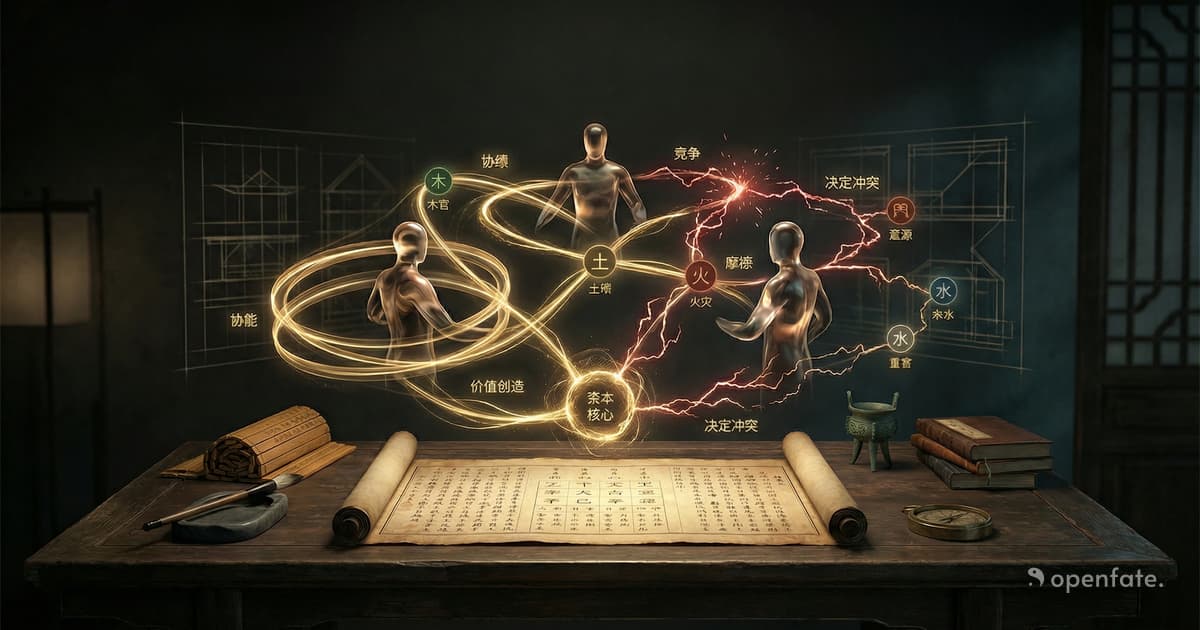
Core Answer
Business Partnership Bazi uses Five Elements and Ten Gods as a traditional comparison framework for discussing decision friction, complementary resources, roles, and equity questions. It does not replace due diligence, contracts, financial modeling, or legal advice.
Introduction
Choosing a business partner requires evidence about competence, integrity, finances, governance, and collaboration under pressure. Due diligence, references, financial records, and professional advice remain the primary sources for that decision.
This article uses traditional Chinese metaphysics only as a supplementary discussion framework. It can generate questions, but it is not data science or a commercial forecasting model.
What is Business Partnership Bazi Compatibility?
Business Partnership Bazi compares elements, Ten Gods structures, and Luck Pillars as a traditional framework for discussing decision-making, complementary resources, risk tolerance, and profit allocation. It highlights these dimensions:
How Five Elements Can Supplement Partnership Discussions
Five Elements provide symbolic language for questions about resource allocation, growth pace, and decision conflict. They cannot prove cash flow, execution quality, or partnership outcomes; use records, capabilities, financial data, and governance evidence for those judgments:
How Ten Gods Can Structure Role and Equity Questions
Ten Gods are traditional relationship labels that can organize discussion about innovation, monetization, management, and compliance. They cannot assign jobs, equity, or approval authority; those decisions require experience, performance, responsibility, legal review, and financial controls:
2026 Fire Horse Year: Hedging Partnership Volatility and Structural Risks
Traditional Bazi describes 2026 Bing Wu as a strong Fire year. Teams can turn that symbolism into a governance review rather than a prediction that conflict will occur:
Related Strategic Reading
FAQ
How does business partnership compatibility differ from marriage synastry?
What if business partners have clashing Five Elements?
Which Ten Gods structure makes the best startup CEO?
What is the biggest threat to partnerships in the 2026 Fire Horse Year?
Review Your Commercial Alliance
Use structured prompts to discuss resources, decision habits, and risk boundaries, then carry those questions into due diligence, contracts, and governance review.
 Review Partnership Questions →
Disclaimer: Divination and metaphysical systems are traditional cultural frameworks, not modern science or professional advice. Use this content for reference and make decisions from real-world facts and qualified guidance.