Published at 2026/04/09 | #ParentChildBazi #TalentAnalytics #EducationStrategy
Core Answer
Parent-Child Bazi Synastry uses Five Elements and Ten Gods as a traditional framework for exploring learning preferences, pressure responses, and communication. It is not a scientific aptitude test and should not label a child or determine education, health, or career decisions.
Introduction
High-pressure education can overlook differences in interests, pace, communication, and support needs. A single success template rarely fits every child.
OpenFate organizes traditional Bazi concepts into prompts parents can compare with observation, teacher feedback, and the child’s own voice. The chart does not measure intelligence, talent, or future achievement.
What is Parent-Child Destiny Reading and Synastry?
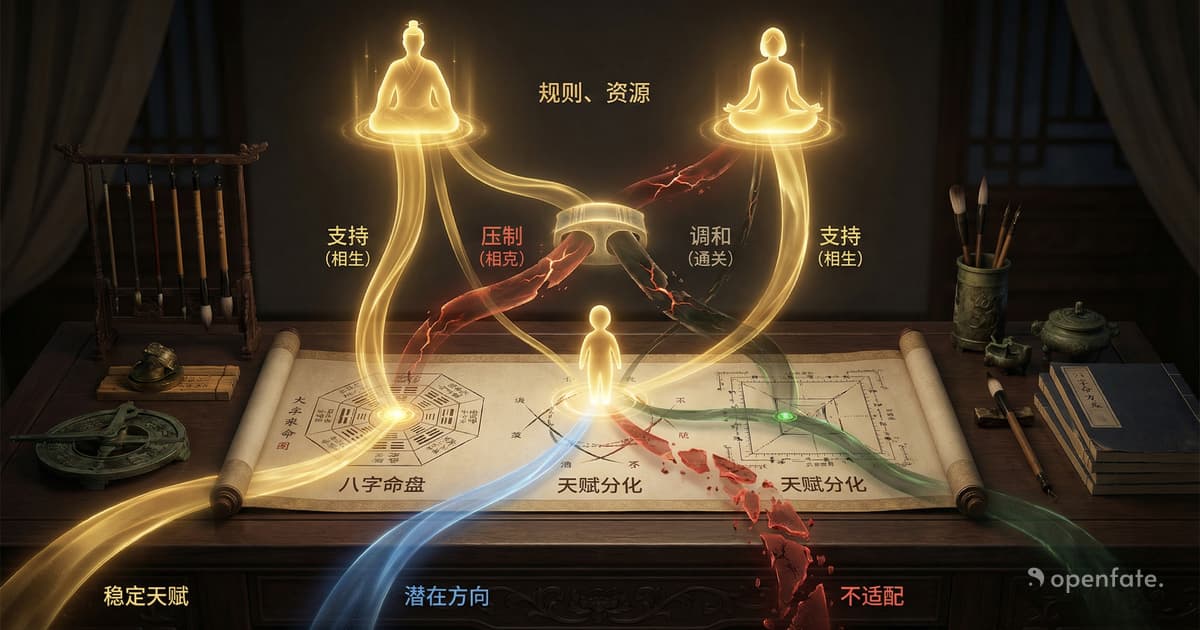
The framework compares two charts to organize questions in three areas. These are interpretive hypotheses, not measured traits or fixed outcomes:
Intergenerational Support: Do the traditional element relationships suggest questions about encouragement, limits, or pressure?
Learning Preferences: Can Ten Gods categories prompt discussion of structure, expression, independence, or practical learning?
Timing for Reflection: Can an annual theme remind a family to review stress, workload, and communication without predicting a crisis?
Using Five Elements to Discuss Support and Pressure
Element relationships are metaphors for reviewing family dynamics, not proof that a parent causes a child’s mental state:
Metal and Wood: This pairing can prompt a conversation about rules and autonomy. Check whether discipline is clear, proportionate, and open to feedback.
Water and Fire: This pairing can prompt a conversation about caution and enthusiasm. Listen before offering practical objections.
Wood and Fire: This pairing can prompt a conversation about encouragement. Support is useful when it also respects the child’s interests and limits.
Using Ten Gods as Learning-Style Prompts
Ten Gods categories can suggest questions about preferred learning environments. They cannot diagnose aptitude or prescribe one school or career:
Officer and Resource themes: The child may appreciate structure and clear expectations. Compare this with actual classroom feedback.
Hurting Officer and Output themes: The child may value expression and independent problem-solving. Consider flexible or project-based options without assuming one path is required.
Seven Killings and Wealth themes: The child may engage with competition or practical projects. Offer safe experiments and observe sustained interest.
2026 Fire Horse: A Family Check-In
The 2026 Fire Horse can be read as a traditional prompt to review stimulation, workload, and recovery. It is not a medical explanation or a forecast of adolescent behavior:
Reduce unnecessary micromanagement: Give age-appropriate choices and lower the intensity of repeated lectures when communication is strained.
Protect recovery time: Balance tutoring with rest, movement, and activities the child actually enjoys. Seek qualified support for persistent distress.
What does Parent-Child Bazi Synastry primarily reveal?
It organizes questions about support, learning preferences, and times when communication deserves extra attention. It does not reveal an innate cognitive advantage or predict a conflict date.
Is the traditional concept of "clashing with parents" real?
There is no evidence that a chart clash causes harm. At most, use the symbol to ask whether rules, autonomy, and communication need attention, then verify that through observation and conversation.
Why do Hurting Officer profile children struggle in traditional schools?
Output themes may prompt questions about expression and independent thinking, but they do not determine school fit. Use the child’s interests, wellbeing, teacher feedback, and educational professionals when choosing support.
How does the 2026 Fire Horse year affect teenagers?
No causal effect is established. Families can use the Fire symbolism as a reminder to review stimulation, autonomy, rest, and persistent distress with qualified professionals when needed.
Explore a More Responsive Education Plan
Use traditional Bazi themes to prepare better questions, then verify them with the child, educators, and observable progress.
Disclaimer: Divination and metaphysical systems are traditional cultural frameworks, not modern science or professional advice. Use this content for reference and make decisions from real-world facts and qualified guidance.

 Explore Parent-Child Themes →