
In-Depth Analysis: The "Zi Wei Dou Shu + Manifestation" Strategy: What It Is, How It Works, and How to Apply It to Your Life
Core Answer
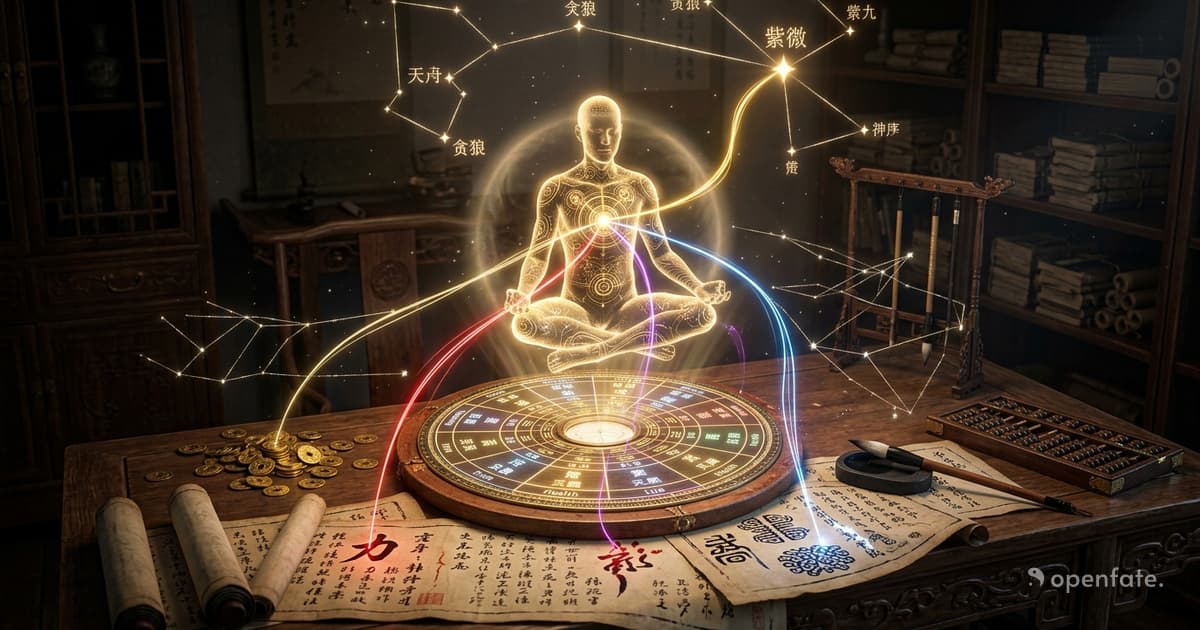
Ziwei Dou Shu Manifestation Strategy uses the 12 Palaces and Four Transformations as a self-observation and life-phase framework. It helps translate symbolic timing into priorities, boundaries, action, and review; it does not multiply success or guarantee wealth and career outcomes.
Introduction
People often use manifestation language to describe intention and goal pursuit. A grounded version needs more than positive emotion: it needs timing awareness, realistic constraints, specific action, and feedback.
Ziwei Dou Shu + Manifestation Strategy uses palace and transformation themes to organize those planning questions. This article explains how to use the system without treating thoughts as a force that directly attracts external events.
1. Strategy Analysis: What is "Zi Wei Dou Shu + Manifestation"?
This strategy combines manifestation language about intention-setting with Ziwei palace and Four Transformation themes as a goal-setting and review framework.
Ziwei Dou Shu is a Chinese divination tradition that arranges stars and 12 Palaces from birth data to discuss themes such as identity, resources, and work. Historical origin stories vary by lineage, so this guide does not present legendary attribution as settled fact.
San He and Four Transformation traditions provide different interpretive layers: one emphasizes palace structure, while another discusses changes in symbolic themes over time. They are not real-time event APIs or proof of causation.
A practical Manifestation Strategy treats thoughts as inputs to attention and behavior, not direct causes of external events. Ziwei timing can provide reflection windows, but real decisions still require evidence, consent, professional advice where relevant, and measurable follow-through.
2. Underlying Logic: How Does It Work?
The practical value is translating symbolic language into reviewable questions, not presenting Ziwei as scientifically validated psychology. Use these dimensions:
3. Practical Guide: How Can Users Concretely Utilize This Strategy?
After understanding these boundaries, translate Ziwei themes into small, reviewable actions:
Conclusion
Ziwei Dou Shu Manifestation Strategy can provide a structured life-phase reflection system. Its practical value is helping users clarify desires, choose actions, set guardrails, and review evidence without treating the chart as a cosmic treasure map.
FAQ
Does "Hua Ji" in Zi Wei Dou Shu mean bad luck? Can I still manifest?
If my Wealth Palace has no auspicious stars, can I still manifest wealth?
Begin Your Zi Wei Manifestation
Use OpenFate AI to organize Ziwei themes, action questions, and review boundaries without guaranteeing wealth or career outcomes.
 Plan with Ziwei
Disclaimer: Divination and metaphysical systems are traditional cultural frameworks, not modern science or professional advice. Use this content for reference and make decisions from real-world facts and qualified guidance.